


True comfort during a trip is rarely found by accident; it is the result of a lack of friction. Most travelers fall into the trap of booking based on a recognizable brand name or a low price point, only to arrive and find their room overlooks a noisy construction site or lacks the basic space to open a suitcase. When searching for Hotels To Stay In T Nagar Chennai, you have to look beyond the polished lobby photos and high-thread-count sheets. Real comfort is the intersection of quiet, convenience, and proactive service. It means staying in a location that puts you at the center of the action without forcing you to hear the chaos from your bedside. This guide shifts the focus from the “luck of the draw” to a tactical, intentional selection process. By understanding the specific needs of your itinerary, you can transform a standard overnight stop into a genuine sanctuary.
The best room in the world feels like a cage if you spend ninety minutes in a taxi just to reach it. One of the most vital tips for booking hotels is the 500-meter rule. In a high-traffic city like Chennai, staying within a half-kilometer bubble of your primary destination, whether it is the shopping blocks of Pondy Bazaar or a specific corporate office, is a non-negotiable requirement for a comfortable hotel stay. Each extra kilometer adds more strain than expected, eating into the energy you meant to use once you actually arrived.
However, proximity alone isn’t enough. You must also account for the “Noise Buffer.” Smart travelers use satellite maps to audit the immediate surroundings for hidden traps. A hotel might be close to your meeting, but if it shares a wall with a 24-hour bus depot, a school playground, or a railway line, your sleep quality will suffer. Finding that perfect pocket of tranquility within a bustling district is the ultimate win. By minimizing travel time and maximizing quiet, you secure a level of comfort that far outweighs any fancy lobby amenity.
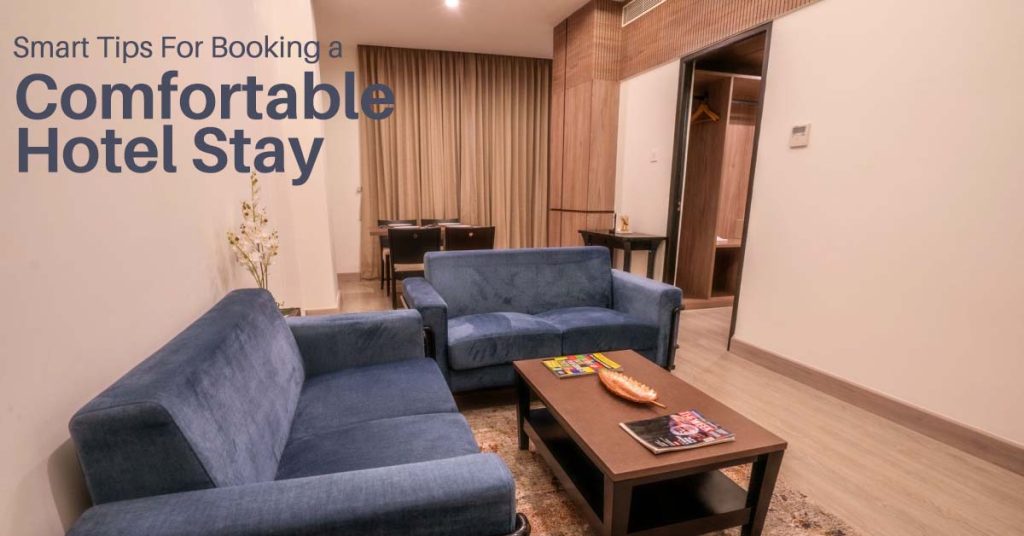
Hotel photographers are masters of deception, using wide-angle lenses to make a 200-square-foot box look like a grand ballroom. One of the most practical tips for booking hotels is to ignore the photos and look strictly at the floor plan or listed square footage. For a truly comfortable hotel stay, a 325-square-foot studio is the functional baseline for two people. Anything labeled “Compact” or “Standard” usually implies you’ll be tripping over your luggage. A “Studio” designation generally offers the breathing room needed to keep your sleeping area separate from your living space.
For business travelers, the layout is even more critical. A desk that doubles as a dressing table is a compromise, not a workspace. You need distinct zones. If you are staying for more than three days, the “Long-Stay Upgrade” to a suite apartment is almost always worth the extra cost. Having a separate living area prevents the inevitable “cabin fever” that sets in when you are forced to eat, work, and sleep on the same four corners of a bed. When you have the space to move, your productivity stays high, and your stress levels stay low.
The dining scene at a hotel is often the clearest window into its overall management. A generic “multi-cuisine” cafeteria usually signals a factory-style approach to hospitality. Conversely, hotels that house niche, specialized, or award-winning concepts like a focused Peranakan restaurant or a curated rooftop bar tend to prioritize quality over volume. These establishments understand that a meal is an experience, not just a logistical necessity. This attention to detail in the kitchen almost always translates to better service in the guest rooms.
The breakfast experience is another major benchmark for comfort. A chaotic, self-service buffet line can be the most stressful part of your morning. Look for properties that offer tableside service, where your coffee is brought to you and your eggs are made to order. It changes the entire tempo of your day. Finally, consider the “late-night reality.” If your flight lands at 11 PM, a 24-hour support team and a kitchen that doesn’t shut down at sunset are essential. Nothing kills the comfort of a luxury room faster than a growling stomach and a “closed” sign on the room service menu.
Forget the “pillow menu” or the fancy chocolates on the nightstand; real comfort depends on the bones of the room. You can tell a lot about a hotel’s quality by its power outlets. In a modern, well-designed space, you shouldn’t have to crawl under a desk to charge your phone. Bedside charging and high-bandwidth Wi-Fi that doesn’t stutter during a video call are the true metrics of a high-functioning room. If the infrastructure fails, the stay fails.
The sleep environment is equally technical. Effective blackout curtains and double-glazed windows aren’t luxuries; they are necessities in a city that never sleeps. Always check the renovation status of a property. A hotel that has had a complete makeover within the last 24 months will almost certainly have superior insulation and quieter, more precise climate control systems. For anyone staying longer than a weekend, 24-hour reception and efficient on-site laundry services become the pillars of a stress-free experience. These amenities don’t just look good in a brochure, they actually solve the daily frictions of travel.
Where you book is often more important than what you book. One of the most overlooked tips for booking hotels is understanding that third-party “deal” sites often put you at the bottom of the room assignment pile. These bookings are frequently relegated to the noisier rooms near the elevator, the ice machine, or the service stairs. To guarantee a truly comfortable hotel stay, booking direct is almost always the superior move.
When you bypass the middleman and call the hotel directly, you gain immediate leverage. You can negotiate flexible check-out times or request a placement on a higher floor where the street noise is significantly muffled. Beyond the digital transaction, a quick two-minute confirmation call to the front desk is invaluable. Verbally confirming your “quiet room” request or checking if your studio has a specific view ensures your preferences are actually logged in the system. That brief human connection often results in a better room than a dozen automated confirmation emails ever could.
Comfort isn’t a vague feeling; it’s a math problem you can solve before you even pack a bag. Whether you’re looking at the retail chaos of T. Nagar or the corporate stretch of Hotels In Mount Road Chennai, the trap is always the same: assuming a high price guarantees a good night’s sleep. It doesn’t. You have to be aggressive about the details that actually impact your day, like whether the Wi-Fi can handle a basic call or if the walls are thin enough to hear the neighbor’s TV.
A hotel room is essentially an investment in your own sanity while traveling. If you skimp on the research and end up in a cramped “standard” room facing a generator, you’ve already lost. Take ten minutes to check the floor plan, verify the last renovation date, and talk to a human at the front desk. Those small, tactical moves are the only way to ensure your stay is actually restorative, rather than just another logistical headache to manage.


Leave a Reply