


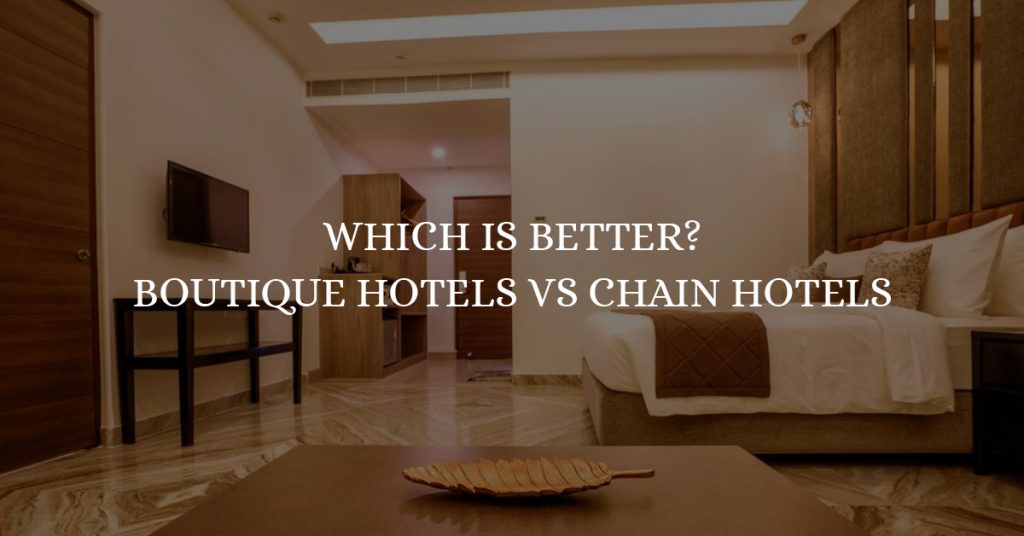
Most travellers have quietly asked themselves the same question while scrolling through booking options: do I go with the familiar name I recognise, or the smaller independent property that looks more interesting? Boutique hotels have been gaining ground steadily across every category of traveller, not just those chasing experiences. If you are visiting Chennai and weighing your options, understanding the genuine differences between the two will help you decide. For travellers already considering Boutique Hotels in Chennai, this comparison is worth reading before you book.
The difference between boutique and chain hotels goes beyond size, though size is part of it. Chain hotels operate on a standardisation model: the same room layout, the same breakfast, the same check-in process, whether you are in Chennai, Kolkata, or Dubai. That consistency is the product. You know exactly what you are getting because it is identical everywhere.
Boutique hotels operate on a different logic. The property is specific to its location, its owner’s vision, and its neighbourhood. No two are alike. That specificity is the product.
A few concrete differences worth understanding:
Scale: Most boutique properties have between 10 and 100 rooms. Chains typically run 150 to 500 rooms per property. Smaller scale means more personalised attention per guest
Design: Chain hotels use standardised interiors rolled out across all properties. Boutique hotels are individually designed, often reflecting the local culture, architecture, or a specific aesthetic point of view
Staffing ratios: Smaller properties tend to have higher staff-to-guest ratios, which directly affects service quality and how quickly staff get to know returning guests
Ownership: Chain hotels are corporate-owned or franchised. Most boutique properties are independently owned, which means decisions are made by people who are invested in the property’s reputation, not a regional manager optimising for a quarterly report
It is worth being honest about this. Chain hotels have genuine advantages that are not just marketing.
Loyalty programmes are the biggest one. If you travel frequently for work and stay with one chain consistently, the points add up to real value: upgrades, free nights, lounge access. A boutique hotel cannot match this unless it belongs to a collection like Small Luxury Hotels of the World.
Predictability matters for certain trips. If you are arriving late after a long flight and just need a clean, functional room with reliable WiFi and a decent breakfast, a well-run chain delivers that without surprises. When you are tired and pressed for time, consistency is genuinely comforting.
Scale of facilities at large chain properties (ballrooms, conference centres, full gyms) can matter for certain events or corporate needs a smaller property cannot accommodate.
This is where the comparison shifts. For travellers who care about the stay itself, not just the logistics of being somewhere, the boutique hotel experience offers things that chain properties structurally cannot.
The staff know you. At a 40-room boutique hotel, the front desk team sees the same faces. By the second morning, they know your coffee order. They remember you asked about a restaurant last time. That is not a service script, it is just what happens when the property is small enough that people are people rather than room numbers.
The design has a point of view. A boutique hotel that has been thoughtfully designed tells you something about the city it is in, or the sensibility of the people who built it. Walking into a well-designed boutique lobby feels different from walking into a chain atrium that could be anywhere.
The food and beverage offering is often genuinely distinct. Chain hotel restaurants exist to serve guests. Boutique hotel restaurants are more likely to be destinations in their own right, run by chefs with real creative investment in what they are doing.
Neighbourhood integration. Boutique hotels tend to be embedded in specific neighbourhoods rather than the sanitised hotel corridors of business districts. That means better access to local markets, restaurants, and the parts of a city that actually have character.
The assumption that chain hotels are the natural choice for business travel is worth questioning. Boutique hotels in central locations often place you closer to where business actually happens. Quieter, more intimate properties are easier to decompress after long meeting days. And a well-located boutique stay makes a noticeably better impression when hosting clients than a generic chain room does. Fast WiFi, quiet workspaces, and flexible meeting options are no longer exclusive to large chains either, making the boutique hotel experience a genuinely competitive choice for business travellers.
Not all boutique hotels are good ones. Small and independent does not automatically mean better. A few things worth checking:
Recent reviews, not just the average score. Read the last 20 reviews for consistency. A property with one strong year and a difficult recent stretch will have a fine overall score that hides current problems
The F&B offering. A boutique hotel with a distinctive dining concept is a different proposition from one with a basic breakfast room
Location specifics. Being in an interesting neighbourhood matters, but being on a noisy arterial road within it is a different experience from a quieter side street
Renovation date. A boutique hotel that has not been updated in a decade loses the design edge that makes it worth choosing over a chain
What boutique hotels consistently offer is something that size and standardisation genuinely cannot manufacture: the sense that someone thought carefully about every detail of your stay, from the way the room is laid out to the food on the menu to the staff who actually remember your name by the second morning. That is not a premium reserved for luxury travellers either. A well-run boutique property at a mid-range price point will almost always deliver a more personal, more memorable stay than a chain at the same price point, because the people running it are invested in the property in a way that a franchised chain manager simply cannot be.
The boutique hotel experience also tends to age better in memory. Travellers rarely come home talking about the buffet at a chain hotel. They do talk about the rooftop bar, the neighbourhood they actually got to explore, the restaurant attached to the hotel that turned out to be one of the best meals of the trip. Those details come from properties that are genuinely embedded in their city, not from a brand rolling out the same formula across 400 locations.
If you are visiting Chennai and want a stay that actually reflects the city you are in, rather than a sanitised version of everywhere at once, Best Hotels in Chennai T Nagar offer exactly the kind of considered, location-specific experience that makes boutique the smarter choice for most travellers.


Leave a Reply